Blogs Page

Let’s be real, when it comes to people strategy, most businesses are still driving with Read more
Change is inevitable in any workplace. Whether it’s a company restructure, a new leadership team, Read more
Starting a new role can be exciting, but it also comes with challenges. Whether you've Read more
U-transition from Employee to Leader
  How to Transition from Employee to Leader with Confidence Making the leap from employee Read more
5 Signs You’re Ready to Develop Your Leadership Skills U Transition Consulting
  Leadership isn’t just about holding a title; it’s about mindset, growth, and the desire Read more
5 Blindspots Every Leader Should Address
My personal belief is that as leaders, our journey is a perpetual learning curve. I Read more
What is Coaching and How Will it Benefit Me - leadership coach in Chesterfield
A Definition of Coaching – the INTERNATIONAL COACHING FEDERATION (ICF) - defines coaching as “Partnering with clients Read more
The Power of Yet - Embracing A Growth Mindset - leadership coach in Chesterfield
Embracing a growth mindset The belief that intelligence and abilities can be developed through dedication Read more
develop your team without spending any money - leadership coach in Chesterfield
Developing a strong team doesn't always require a hefty budget. There are many things you Read more
Tips for holding a great 121 - leadership coach in Chesterfield
My clients often ask me what makes for a great 121 (one-on-one) followed by how Read more
8 Ways to Thrive as an Accidental Leader - leadership coach in Chesterfield
In the journey of our careers, many of us find ourselves in leadership positions that Read more
Unintentional Leadership 5 Clues That You're an Accidental Leader - leadership coach in Chesterfield
What are accidental leaders? These are individuals who never set out to lead, yet for Read more

The People Data Revolution: Why Harrison Analytics is the Smartest Move You’ll Make for Modern Leadership

Let’s be real, when it comes to people strategy, most businesses are still driving with one eye closed.

They rely on gut instinct hiring, generic engagement surveys, one-size-fits-all development plans. And then wonder why performance plateaus, top talent walks and teams feel burnt out or disconnected.

Harrison Analytics changes the game.

It’s not just another HR tool, it’s a revolution in how we understand people at work. A blueprint for building stronger, smarter, more aligned teams. A GPS for every part of the talent journey, from recruitment and onboarding to leadership, succession and culture transformation.

If you want to lead differently — and more effectively — have data driven insights which help you ask better and different questions so you can make more strategic people business decisions,   this is your invitation to step into a new way of thinking.

This Isn’t Personality Profiling — It’s Talent Intelligence

Where most profiling tools give you a snapshot, Harrison Analytics gives you a panoramic view.

What makes it is different is that it analyses over 175 traits, interests and preferences revealed through just one very SmartQuestionnaire™,:

  • Behavioural strengths, potential derailers and blind spots
  • Stress behaviours under worked related pressure
  • Emotional intelligence
  • Work environment preferences (including remote-readiness)
  • Leadership competencies
  • Sales Competencies
  • Engagement expectations and satisfaction
  • And crucially—Paradoxical Leadership: the ability to balance seemingly opposite traits like being both assertive and helpful.

Instead of the typical 4 scales which use an either-or comparison, Harrison dives into nuance of how the traits interact, how they shift under stress and how people really show up in their roles. It helps you spot future stars, flag potential risks and support people to perform at their best without guessing.

This is insight you can act on because it reflects how humans actually behave in the complexity of work.

The Power of Paradox: Where Leadership Breaks or Breaks Through

Let’s be honest: people don’t quit jobs, they quit bad management, unclear expectations and work that doesn’t light them up or use their strengths. If your team’s disengaging, the problem might not be them.

Here’s the truth most leadership models ignore: being great at one thing isn’t enough.

You might have a leader who’s bold, visionary and decisive but what happens if they steamroll others or resist feedback under pressure? Or someone kind, empathetic and people-focused who avoids conflict and can’t make tough calls?

That strength in both cases becomes a liability.

Harrison’s paradox model doesn’t just assess whether someone is “good” at a trait, it looks at whether they’ve mastered the tension between two seemingly opposite, and equally valuable behaviours.

This is where real leadership agility lives.

It shows you who leads with balance and who tips into overdrive when the pressure’s on. It pinpoints development areas that most organisations never even think to look for.

And it unlocks conversations that go way deeper than “how’s your leadership style?”

Predict Performance. Don’t Just Hope for It.

Most hiring and promotion decisions are still made on a 50/50 bet. We rely on interviews, CVs, and a gut feeling.
Sometimes we get it right. Sometimes we don’t…….and it costs us.

With Harrison, accuracy rates can hit 95%. Why? Because it maps role fit and culture fit, behavioural strengths and stress reactions, job expectations and motivations. It shows you who’s likely to succeed before you bring them in and exactly how to set them up for success once they arrive.

That’s not just smart hiring. That’s long-term thinking.

So, Harrison automates the bits of HR that software can do really well………….. allowing human HR to focus on the bits only humans can do. This data helps reduce recruitment admin by 75%, lowers dependency on external agencies and drastically improves retention.
Because when people are in roles that suit who they are, they don’t just stay, they excel.

Engagement That Actually Means Something

You’ve heard it a thousand times—“engagement drives performance.”
But how are most companies measuring it?

Most use anonymous surveys that generate vague heat maps, watered-down feedback, and very little actionable insight.

Harrison flips the script. It measures 18 core engagement expectations—across 8 key areas such as worklife balance, authority, communication, recognition, appreciation, renumeration, development—and it ties them to individual profiles.

This means you can finally understand who is engaged, why they’re disengaging, and what to do about it.

You can track trends across the business or functions and also sit down with an individual and say: “Here’s where your expectations aren’t being met. Let’s talk about it.” or equally, to know where to focus to have honest conversations if there is nothing you can do about it at this moment in time

That’s not just engagement reporting. That’s a real-time conversation about what matters most to your people.

From Data to Decisions: The Dashboard That Drives Change

We don’t need more spreadsheets, we need insight we can use.

Harrison’s dashboards are visual, colour-coded and intuitive. They show strengths, gaps and risks at a glance, whether you’re looking at a single individual or a full leadership team. You can zoom into one individual, one function, one region, or the entire organisation.

This isn’t data for the sake of it. It’s data that drives:

  • Smarter succession planning
  • More effective team development
  • Focussed leadership conversations
  • Clearer hiring decisions
  • Stronger alignment between culture, capability and strategy
  • Targeted budget spends to where it will make a difference

In a world obsessed with dashboards, this one actually delivers value.

Built for Customisation. Designed for Scale.

What makes Harrison different is its flexibility. You don’t have to use the whole suite to see results.

You can start with a single aspect —say, engagement or leadership development—and scale as you go. Or you can go all in, building a fully integrated people strategy powered by analytics, not assumptions.

It’s perfect for small businesses wanting to get strategic with people decisions—or large organisations tired of generic tools that don’t reflect the complexity of their teams.

And as your business evolves, so can your people strategy.

The ROI is Undeniable

Harrison isn’t just a “nice to have” it drives hard business value.
Here’s what clients consistently report:

  • Up to 95% improvement in hiring accuracy
  • 75% reduction in recruitment admin
  • Increased retention and reduced turnover
  • Greater productivity and role fit
  • Faster development and coaching results
  • Clearer, data-driven decision-making at all levels
  • Budgets that are spent where they will make a difference

You’re not just investing in insight. You’re investing in outcomes with measurable returns.

The Future of Leadership is Here ……and It’s Measurable

We’ve entered an era where so called “soft skills” like adaptability  and emotional intelligence aren’t just buzzwords, they’re you’re super powers, the make-or-break leadership capabilities. And yet most businesses still don’t have a way to measure or develop them effectively.

Research by Deloitte finds that only about 4% of businesses use predictive talent analytics and yet those who do outperform their competitors on hiring, retention, and productivity.

That’s where Harrison comes in.

It gives you the visibility, the vocabulary, and the validation to build better leaders, stronger teams, and more resilient cultures. It bridges the gap between potential and performance and puts you in the driver’s seat.

If you’re serious about leadership, culture, and long-term business success, this is the smartest move you’ll make.

Ready to see it in action? [Book a free system demo] and discover how Harrison Analytics can power up your people strategy.

Insert this 1 hour Calendly link – https://calendly.com/utransition/harrison-talent-analytics-demo


Navigating Change in the Workplace

Change is inevitable in any workplace. Whether it’s a company restructure, a new leadership team, or a shift in daily processes, adapting to change can feel disruptive and even overwhelming, especially when it’s unexpected or not even wanted.

But here’s the thing: change isn’t just something to get through, it’s something to grow through.

With the right mindset and approach, you can navigate workplace changes smoothly and even use them as an opportunity for growth. Handled the right way, change can open new doors, spark innovation and push you towards opportunities you never considered before. The key is learning how to navigate it with confidence and a proactive mindset.

Here are some practical steps to help you embrace and manage change effectively.

  1. Accept That Change is Constant – and that’s a good thing!

The first step to handling workplace change is accepting that it’s a natural part of any career journey.

Businesses evolve to stay competitive; industries adapt with new trends, roles shift to meet new demands and teams adapt to meet fresh challenges. While it’s natural to feel unsettled, change is often the driving force behind progress. Think about it, if everything stayed the same, there’d be no new opportunities, no development, no growth. The people who thrive in their careers are the ones who embrace change, viewing change as an opportunity rather than a disruption and seeing it as a stepping stone rather than a stumbling block.

  1. Maintain a Positive Mindset

When faced with unwanted change, it’s easy to resist change and focus on what’s being lost. But what if you flipped the perspective? Instead of asking, “Why is this happening?” try asking, “What’s the opportunity here?”

  • Will new processes improve efficiency?
  • Will a leadership change bring fresh opportunities?
  • Could this change make your job easier in the long run?
  • Is there a chance to develop new skills that will boost your career?
  • Could a leadership change bring fresh energy and ideas?

Even changes that feel uncomfortable at first often lead to better ways of working, new career paths, or unexpected growth. Look for the silver lining.

  1. Stay Informed and Ask Questions

A lot of workplace stress during times of change comes from feeling out of the loop. Uncertainty often fuels anxiety. Knowledge Reduces Uncertainty.

If changes are happening in your workplace, take the time to gather information. Speak with managers, attend meetings, read company updates and ask questions to clarify how the changes affect you. Understanding the bigger picture helps you adapt with confidence and make choices rather than feeling like you’re at the mercy of decisions being made around you.

  1. Be Adaptable and Open to Learning

New systems, processes and expectations may require you to learn new skills. One of the most valuable skills in today’s workplace is adaptability. The more open you are to learning new ways of working, the more resilient you’ll be in the face of change.

Take the initiative to upskill, to develop your knowledge and seek out training opportunities and show that you’re willing to embrace new processes. Being adaptable doesn’t just help you handle change, it makes you indispensable in any workplace and helps you stay ahead in your career.

  1. Strengthen Workplace Relationships

Change can feel isolating, but remember, you’re part of a team, you’re not alone. Support your colleagues, ask for help if needed, have honest conversations about how you’re feeling and seek mentors who’ve been through similar transitions. A strong professional network can make all the difference in navigating workplace uncertainty. The more connected you are, the easier it is to share concerns, find solutions, and move forward together.

  1. Focus on What You Can Control

There will always be elements of change that are outside of your control. But instead of focusing on what you can’t influence, shift your energy towards what you can.

  • How can you adjust your workflow to stay productive?
  • What personal goals can you set to stay motivated?
  • How can you take ownership of your role in the transition?

By focusing on what’s within your control, you’ll feel more empowered and less overwhelmed.

  1. Invest in Your Growth – Change is a Chance to Evolve

Investing in personal growth will help you stay resilient in any workplace transformation.

If change has you feeling uncertain, it might be time to invest in yourself. Leadership development, resilience coaching and professional training can equip you with the mindset and skills to manage change effectively and navigate transitions with confidence.

At U-Transition, we help professionals and leaders not just cope with change but thrive through it. Whether you’re leading a team through uncertainty or navigating career shifts, we’re here to support you.

Need Support Navigating Workplace Change?

Change doesn’t have to be stressful, it can be the catalyst for your next big career leap

At U-Transition, we provide expert coaching to help professionals and leaders adapt, grow, and thrive during workplace transitions. If you’re ready to take control and turn change into an opportunity, let’s talk.

How to Transition Smoothly into a New Role.

Starting a new role can be exciting, but it also comes with challenges. Whether you’ve been promoted to a leadership position or moved to a new company, adjusting quickly and effectively is key to success. To help you navigate this transition smoothly, here are some simple, actionable steps to follow.

  1. Understand Expectations from Day One

Before stepping into your new role, take time to understand what’s expected of you. Read through job descriptions, ask your manager for clarity, and seek insights from colleagues. Knowing your key responsibilities will help you hit the ground running with confidence.

  1. Learn the Company’s Culture

Every workplace has its own way of operating. Observe how teams communicate, how decisions are made, and what values are most important. The sooner you align with the company’s culture, the easier your transition will be.

  1. Build Strong Relationships

Networking within your new role is crucial. Introduce yourself to colleagues, schedule coffee chats, and find out who the key decision-makers are. Strong relationships will make your job easier and help you feel more integrated.

  1. Ask Questions and Seek Support

It’s okay not to know everything right away. Rather than struggling in silence, ask questions and seek guidance. Most people appreciate being asked for their expertise, and it shows you’re proactive and eager to learn.

  1. Develop a Clear Plan for Your First 90 Days

Set personal and professional goals for your first three months. This could include mastering key processes, completing training, or taking on a small project. Having a plan will give you direction and measurable progress.

  1. Stay Open to Feedback

Feedback is essential for growth. Be open to constructive criticism, learn from it, and adjust where needed. This will help you improve faster and gain respect from colleagues and managers.

7. Manage Your Time Effectively

A new role often means a heavier workload. Prioritise tasks, use productivity tools and set boundaries to stay organised. Effective time management reduces stress and improves your efficiency.

  1. Stay Confident and Positive

Transitions can be overwhelming, but maintaining a positive attitude and confidence in your abilities will set you up for success. Remember, every new role comes with a learning curve—embrace it!

Ready to Make Your Transition a Success?

If you’re stepping into a new role and want expert guidance, U-Transition can help. Our leadership development coaching provides the support, strategies, and insights you need to thrive. Get in touch with us today and take the next step in your career with confidence!

Contact Info:

Email: Christine@utransition.co.uk

Telephone: 0203 3755 509

How to Transition from Employee to Leader with Confidence

U-transition from Employee to Leader


How to Transition from Employee to Leader with Confidence

Making the leap from employee to leader is an exciting career milestone, but it can also feel overwhelming. Stepping into your first management role brings new responsibilities, expectations and with it new challenges that can shake your confidence. Many new managers worry about whether they’re truly ready for the role, how to assert their authority and how they will be respected by their team who were only recently their peers. How to handle difficult conversations, knowing how and what to delegate and how to fill their time now they are managers are also common fears.

At U-Transition, we specialise in leadership development, helping individuals navigate this change with ease. Whether you’ve just been promoted or are aspiring to lead, here’s how to transition from employee to leader with confidence.

Adopt a Leadership Mindset –  Shift Your Mindset from Contributor to Leader

One of the biggest adjustments for new managers is moving from “doing” to “leading.” As an employee, you focused on completing tasks and meeting individual targets, as a leader, your role is to guide and empower others. Instead of waiting for instructions, start thinking and behaving proactively. Many first-time managers struggle with letting go feeling they should prove their abilities by doing everything themselves. They often think “If I don’t do it myself, it won’t be done right.” However, strong leaders know they are not there to do it all and more importantly, realise they can’t do it all themselves, so they learn how to focus on enabling their team’s success.

Navigate the Shift in Workplace Relationships

If you’ve been promoted within the same team, one of the hardest challenges is managing former peers. You may fear losing friendships or struggle with asserting authority and might be thinking “My colleagues won’t take me seriously as a leader.”. Set boundaries while remaining approachable and have open conversations about the transition early on to reset expectations. Leadership isn’t about being liked, it’s about earning trust through fairness, consistency and integrity.

Master the Art of Delegation

New managers often fall into the trap of micromanaging because they worry about losing control thinking “If I don’t stay involved, things will go wrong.”. This can lead to burnout and demotivate the team. Effective delegation isn’t about offloading work, it’s about empowering others, developing their skills and creating a high-performing team. Provide clear expectations, trust your team and focus on outcomes rather than controlling every step.


Invest in Leadership Development

Leadership isn’t something you either “have” or don’t, it’s a skill and like any skill it can be developed, it requires learning and practice. Investing in management and leadership development through coaching, workshops, or courses helps build confidence, decision-making abilities, and communication skills. At U Transition, we use a variety of proven tools and techniques including the Harrison Assessment to identify and strengthen your unique leadership style. So embrace continuous learning and seek mentorship to develop your leadership abilities.

Build Strong Relationships

You don’t have to figure everything out on your own. Great leaders don’t work in isolation they know the value of collaboration and support.. Transitioning from a team member to a manager means redefining your relationships with colleagues. Active listening, empathy, and clear communication will help you gain trust and inspire your team.  Connect with other leaders, find a mentor, or work with a leadership coach to gain guidance and perspective. Having a support system helps you navigate challenges, build confidence, and grow into your role with greater ease.

Develop Confidence in Decision-Making

“What if I make the wrong call?” New managers often second-guess themselves, fearing they’ll make the wrong decision. Imposter syndrome can then creep in, making you feel like you’re not experienced enough for the role. The reality is, no leader has all the answers and every leader was once new to the role. Confidence does grow through experience. Start with small informed decisions, gather information seek input where needed, and reflect on outcomes to strengthen your judgment. Accept that mistakes are part of learning

Learn to Handle Difficult Conversations

Many first-time managers avoid tough conversations because they fear confrontation or damaging relationships and don’t want to upset anyone. Whether it’s giving constructive feedback, addressing underperformance, or saying no, avoiding these discussions only makes problems worse. See feedback as a way to help others grow rather than something negative. Use clear, direct and supportive communication Effective leaders approach these conversations with empathy, clarity and a focus on solutions.

Master Effective Communication

Leadership isn’t just about giving orders; it’s about setting clear expectations, providing constructive feedback and fostering open dialogue. Strong communication skills help leaders create a positive and productive work environment. Ensure your messages are clear, concise and supportive to keep your team aligned and motivated.

Embrace Continuous Learning

Leadership is a journey, not a destination. Even experienced leaders continue to learn and adapt. Stay open to feedback, keep up with industry trends, and seek opportunities for personal and professional growth. The more you learn, the more confident you’ll feel in your leadership role.

Seek Guidance from Experts

Stepping into leadership can be daunting, but you don’t have to do it alone. Working with a leadership coach can provide personalised support and strategies to help you grow into your role with confidence. At U-Transition, we specialise in helping new leaders thrive through tailored coaching and leadership development programs.

Final Thoughts

Transitioning from an employee to a leader is an exciting and rewarding challenge. By developing the right skills, embracing a leadership mindset, and seeking support, you can lead with confidence and success. If you’re ready to take your leadership journey to the next level, U-Transition is here to help.

For expert leadership development and coaching tailored to your needs, contact Chrissie Coates at U-Transition today!

5 Signs You’re Ready to Develop Your Own Leadership Skills

5 Signs You’re Ready to Develop Your Leadership Skills U Transition Consulting

5 Signs You're Ready to Develop Your Own Leadership Skills


Leadership isn’t just about holding a title; it’s about mindset, growth, and the desire to make an impact. Many professionals reach a point in their careers where they feel drawn to take the next step in their leadership journey. But how can you tell if now is the right time to invest in developing your leadership skills?

Here are five key indicators that show you’re ready:

  1. You’re Seeking New Challenges

One of the clearest signs you’re ready to enhance your leadership skills is a craving for new challenges. You might feel that your current role no longer pushes you or that you’re ready to expand your influence beyond your immediate responsibilities. This drive to tackle bigger, more complex problems demonstrates a readiness to step into a leadership role that requires strategic thinking and decision-making.

  1. You Want to Inspire and Empower Others

Do you find yourself naturally mentoring colleagues or taking an interest in helping your team succeed? The desire to inspire and empower others is a hallmark of effective leadership. If you feel fulfilled by supporting others’ growth and want to create a positive impact within your organisation, it’s a clear sign that developing leadership skills could help you channel this passion.

  1. You’re Striving for Personal Growth

Great leaders are committed to continuous learning and self-improvement. If you’re actively seeking ways to enhance your skills, expand your knowledge, or overcome personal limitations, it shows you’re ready for the transformative journey of leadership development. Leadership requires self-awareness and a willingness to evolve, and your commitment to personal growth is a strong indicator that you’re prepared for this path.

  1. You See Opportunities for Change

Leaders often emerge when they identify areas for improvement within their organisation or industry. If you’ve noticed inefficiencies, untapped potential, or innovative ideas that could drive progress, it might be time to step up and lead. Your vision and initiative can inspire others to follow your lead, making you a catalyst for positive change.

  1. You’re Ready to Step Out of Your Comfort Zone

Leadership requires courage—the courage to make tough decisions, take risks, and embrace vulnerability. If you’re feeling ready to challenge yourself, take on greater responsibility, and navigate uncertainty, it’s a strong sign that you’re prepared to develop the resilience and confidence needed to lead effectively.

What’s Next?

Recognising these signs is the first step in your leadership journey. The next step is taking action.

At U Transition Consulting, we specialise in guiding professionals like you to unlock their leadership potential. Through tailored coaching, e-learning courses, and tools like the Harrison Assessment, we help you develop the skills and confidence to lead with purpose.

If you’re ready to take the leap, reach out to us today. Together, we’ll create a personalised plan to help you achieve your leadership goals and make a lasting impact.

Are you ready to embrace your leadership journey? Contact U Transition Consulting today and let’s start building your future.

5 Blindspots Every Leader Should Address!

5 Blindspots Every Leader Should Address

5 Blindspots Every Leader Should AddressMy personal belief is that as leaders, our journey is a perpetual learning curve.

I believe we are never “done” and that there is always something we could be more effective at whether that is building and honing a current strengths or learning how to do something we don’t yet know how to do.

Acknowledging that we have blind spots is a first crucial step towards continuous growth, not only personally, but also for our teams and our business.

Here are the 5 blind spots that I believe leaders often overlook:

  1. Self-awareness gap: A lack of self-awareness can lead to misguided decisions, hinder personal development and will ultimately harm relationships, undermine trust and doom the culture in your business. Being unaware of your impact on yourself, your peers and your team and not understanding how others experience you, is one of the biggest causes of stress, frustration and overwhelm I see when working with leaders. This is only followed by becoming more aware…. and then choosing to do nothing about it. Those who regularly invest time in self-reflection, seek feedback from peers, subordinates, and mentors and embrace tools like personality assessments, 360-degree feedback, coaches and mentors to gain insights into their leadership style and impact, are more confident, less stressed and overwhelmed and have happier teams. And better business results.
  2. Failure to communicate effectively: Communication is the lifeline of leadership. Leaders often underestimate the impact of clear and transparent communication. I often hear things like “well I told them and they didn’t listen”, or “it was in the memo”, or “it’s obvious isn’t it, I shouldn’t have to spell it out” . The best Leaders will avoid assumptions and ensure their messages are not only heard but also understood by everyone on their team. Prioritising clear, transparent, and consistent communication, actively listening to team members, and ensuring that your messages are tailored to the audience using various communication channels to reach different team members effectively, is key. Invest in communication training for yourself and your team.
  3. Overemphasis on authority: Effective leadership isn’t about wielding power; how senior your are or how many stripes you have on your badge. It’s about inspiring, motivating and empowering others. Leaders who rely on their authority risk alienating their teams and creatin toxic cultures. When you nurture collaboration and actively seek input from team members, you build relationships and learn to trust, you create an environment where everyone’s contributions are valued. Empowering others to make decisions within their areas of expertise and creating open channels for communication, where team members feel comfortable expressing their ideas and concerns without fear of ridicule or retribution will get you much more that using the power of the badge..
  4. Resistance to change: In today’s dynamic world, adaptability is crucial. Leaders who resist change hinder business progress. Embrace a mindset that sees change as an opportunity for improvement, fostering innovation and resilience within your team. Stay informed about industry trends and emerging technologies. Encourage a culture of experimentation and learning from failures. Communicate the benefits of change clearly and involve the team in the decision-making process.
  5. Neglecting employee well-being: Leaders sometimes focus so much on achieving business goals that they overlook the well-being of themselves and their team members. This leads to issues like micromanagement, presenteeism, high sickness, high turnover, stress and more. Prioritise a healthy work-life balance, provide support, and cultivate an environment where mental and emotional health are valued. Encourage breaks, (including taking them yourself) flexible schedules, and time off when needed. Actively promote mental health awareness and provide resources such as counselling services. Lead by example by demonstrating a healthy work-life balance.

What other blindspots have you encountered?

Share your thoughts and strategies on addressing blind spots in the comments.

Together, we can build stronger, more resilient leadership. 💪

Points to ponder:

  • What are your blind spots? and how are they hindering your current personal and business performance?
  • What are your strengths and how are they supporting your current personal and business performance?
  • What thoughts and actions might you have to change in order for you to get there?
  • What will you be saying in January 2025 about the year you have just had?

What is Coaching and How Will it Benefit Me?

What is Coaching and How Will it Benefit Me - leadership coach in Chesterfield

What is Coaching and How Will it Benefit Me - leadership coach in ChesterfieldA Definition of Coaching

– the INTERNATIONAL COACHING FEDERATION (ICF) – defines coaching as

“Partnering with clients in a thought-provoking and creative process that inspires them to maximize their personal and professional potential. The process of coaching often unlocks previously untapped sources of imagination, productivity and leadership.”

In the work context coaching is often used

  • As a developmental approach to working and interacting with other people
  • To produce optimal performance and continuous improvement
  • To focus on clarifying goals, improving work related skills, mindsets and behaviours
  • To create solution focussed individuals and teams

Coaching will often have a knock on effect of positively impacting personal attributes such as self esteem, confidence and relationships even if you are focussing on a work related topic.

What is coaching?

For me coaching …..

  • Is a key skill for any leader – that you can use in any given moment
  • Is a shift from telling, problem solving and giving advice, to listening and asking questions and enabling individuals to find their own solutions
  • It facilitates the use of knowledge, skills and experiences of the team
  • It stretches and grows and develops you and your team
  • It creates clarity from confusion, overwhelm or being stuck
  • Is solution and future focussed
  • Supports taking action and accountability

Benefits of Coaching

  • When people are coached into finding their own solutions, they learn in the process. This means that when they come across a similar situation in the future, they feel empowered and resourceful – this leads to less reliance on you as their manager to give them advice or solve their problem for them in the future – less questions, less phone calls, less firefighting = more time back
  • Coaching empowers your people to understand their potential, and to identify how they can achieve their goals
  • It’s highly motivational
  • Coaching is also extremely rewarding for the coach themselves, who facilitates first-hand the development of team members
  • It supports Retention and Engagement
  • It Builds Relationships which are founded in Trust, Integrity, Honesty and Confidentiality
  • It Cultivates a culture of creativity, feelings of value and trust, and self-directed individuals rather than learned helplessness
  • Enables great conversations to take place
  • Positively impacts productivity and business results

Coaching can take place as a programme or series of sessions for example with an external coach (someone from outside the business) or an internal coach (someone who is a trained coach and is employed by the business)

OR

It can simply be an approach – a way of “being” day to day, utilising a coaching approach.

So what is a coaching approach?

Coaching is one of a wide range of tools and techniques available to a manager and leader and a full blown sit down 121 coaching conversation is not always the most beneficial or appropriate tool to draw upon.

However, in my experience, embracing a coaching approach means you have access to skills that can be used it in almost all situations and will enhance the majority of conversations.

We all use the fundamental skills of coaching daily, for example we all use questions, we all listen, we can all create rapport …….if we can develop and hone these skills further to do them really, really well and add in a dab of curiosity and a continuous improvement mindset, then the quality of our conversations will be better and so will the outcomes. And we will still leverage the benefits listed above.

If you buy into the concept of coaching being applied within a leadership style it can be used “on the go” day to day by a line manager, an individual or team member – on the job, in the canteen, by the coffee machine, in a meeting, on the phone and many more places.

You do not have to be a line manager to use a coaching approach.

I believe it is helpful to also hold some underpinning beliefs such as

  • Everyone is capable of more
  • I, as leader, don’t need to know all the answers
  • I can help someone else to see something from a different perspective, stretch their thinking, challenge norms, encourage creativity, stimulate debate
  • Everyone has a right to an opinion, view, perspective that may be different to someone else’s and can voice it appropriately – whatever their position or jo title
  • Using skills like great questions, listening and genuine curiosity will grow an individual and create a culture of continuous improvement rather than learned helplessness

There are many more I could add.

What are the coaching skills I need to develop?

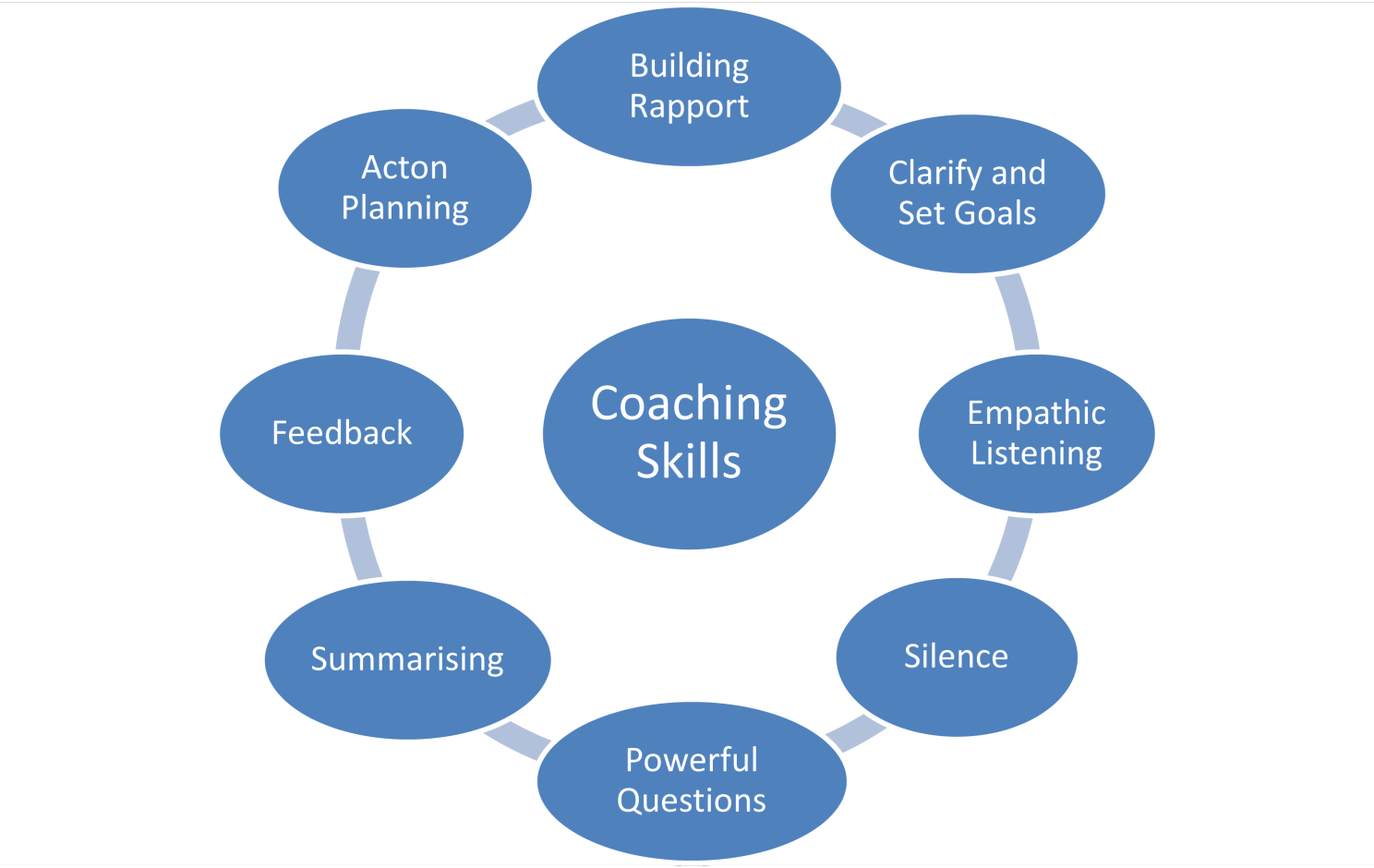
coaching skills

Most of you will recognise skills listed above. For me, there is an art to using them well and effectively and in the right context.

The good news is that they are all skills you can practice every day in pretty much all conversations. If you want to ask better questions, or listen more effectively or practice summarising or using silence, you need to identify what exactly you want to get better at, know what good looks like and give it a go.

For example, if you know you are guilty of asking questions and filing in the answer if someone doesn’t reply straight away – can you practice counting to 10 in your head and leaving silence before jumping in?

If you know you always give someone the answer when they come to you with a question, can you practice asking something like “what do you think you should do?” or “what thoughts have you had about what you would do next?”

If you want to practice effective listening can you stop everything you are doing and focus solely on the other person in that moment when they come to you with a questions?

Asking the person you are in a conversation with to give you some feedback and sharing what you are working on with a trusted colleague who can observe you and give you some feedback can be really helpful in building skills as is self reflection and training.

Coaching is a very hands on and practical skill, you can read about it, listen to people talk about it and go on a training course to learn how to do it however, you will only get better at it if you continue to practice and develop the skills you have learnt, continue to seek feedback from the people you are coaching and reflect on each conversation.

Remember to be kind to yourself when you make a mistake and learn from them. Accepting you will make them is all part of the learning process.

So how will you develop your coaching approach?

If you are interested in developing your own coaching skill toolkit or being coached yourself,

Book a strategy call with me: https://calendly.com/utransition


I know from personal experience the power of coaching.

There have been times over the years when I have needed a coaching package, a series of agreed sessions over a set period of time.

There’s have been times when I have needed a singular conversation with someone to get me back on track on the hoof, in the moment.

There have been times when I’ve not wanted it at all ……..but I’ve needed it.

It has given me space to get out of my own head when I’m bogged down or overwhelmed, enabled me to clarify my issues, to sharpen or re set my focus and thinking and to lay down my course of action.

A coach has helped me to step away from any emotional connection I may have had and enabled me to see things more objectively. A coach has asked me some really tough questions, played devils advocate, shared different perspectives and different lens than the one I had been using and held me to account . A coach has been equally supportive, provided a safe space to do all of this, shown me I have choices, and helped me to recognise and celebrate my success and wins and been a trusted ally.

Coachees echo this and will often say they also have increased, confidence, self esteem and motivation as a result of working with a coach. The knock on effect of this is of course, a clearer focus for the team, better interpersonal relationships and business results ….and all of the above impacts your personal life.

As a coach myself, coaching gives me constant feedback and increased awareness of my own skills set strengths and areas for improvement. I always learn something about myself during the coaching conversation I have.

If you are interested in developing your own coaching skill toolkit or being coaching yourself,

Book a strategy call with mehttps://calendly.com/utransition

The Power of Yet – Embracing A Growth Mindset

The Power of Yet - Embracing A Growth Mindset - leadership coach in Chesterfield

The Power of Yet - Embracing A Growth Mindset - leadership coach in ChesterfieldEmbracing a growth mindset

The belief that intelligence and abilities can be developed through dedication and hard work, gives a strategic advantage in today’s fast-paced world.

Coined by psychologist Dr. Carole Dweck in her research with children, this mindset fosters resilience, persistence, and adaptability.

Dweck’s research contrasts a growth mindset with a fixed mindset, where individuals perceive their qualities as unchangeable. Research shows that adopting a growth mindset leads to better academic performance and a positive outlook, making it essential for personal and professional success in the competitive modern landscape.

In the context of business, embracing a growth mindset offers a significant advantage. Businesses that foster a culture of continuous learning and development among their employees tend to be more innovative, adaptable, and resilient in the face of challenges.

Employees with a growth mindset are more likely to view setbacks as opportunities to learn and improve, leading to increased problem-solving abilities and creativity. A growth mindset also promotes a collaborative environment where employees are open to feedback and willing to experiment, driving organisational growth and success.

In a rapidly changing business landscape, cultivating a growth mindset not only enhances individual performance but also contributes to the overall agility and competitiveness of the entire organisation.

The Power of Yet

The “power of yet” is a core concept in the growth mindset philosophy.

Instead of saying, “I can’t do this,” individuals with a growth mindset say, “I can’t do this yet.”

The addition of the word “yet” transforms limitations into opportunities, signifying a belief in the ability to improve over time.

This shift opens doors to continuous improvement and limitless possibilities, reframing failures as temporary obstacles on the path to mastery.

Some of the real benefits are summarised here

  1. Enhanced Innovation and Problem-Solving: A growth mindset encourages employees to view challenges as opportunities to innovate. When individuals believe in their ability to develop skills, they approach problems with creativity and perseverance. Innovative thinking can lead to the development of ground breaking products, services, and processes, giving businesses a competitive edge in the market.
  2. Cultivating a Passion for Lifelong Learning: A growth mindset fosters a passion for lifelong learning. Individuals who believe in their ability to develop skills are more likely to seek out new challenges and opportunities. Whether it’s acquiring technical expertise, delving into a new field, or enhancing interpersonal skills, a growth mindset nurtures a hunger for knowledge and personal development. This continuous learning not only enriches their lives but also makes them adaptable in a rapidly changing world.
  3. Increased Employee Engagement and Productivity: Employees working in a growth mindset environment feel valued and empowered. They are more engaged in their work, leading to increased productivity and higher quality output. When individuals are encouraged to learn from failures and see setbacks as temporary, they remain motivated, leading to a more committed and productive workforce.
  4. Building Resilience, Confidence, and Collaboration: With a growth mindset, resilience becomes a natural trait. A growth mindset equips employees with the resilience to bounce back from failures and setbacks. Setbacks are seen as temporary roadblocks, not insurmountable barriers. This resilience, in turn, builds confidence, enabling employees to approach tasks with self-assurance and collaboration flourishes. People are more inclined to share knowledge, support one another, and collectively strive for excellence, creating a positive and empowering community. When employees perceive challenges as opportunities to learn and grow, stress levels decrease, and overall well-being improves. This positive outlook contributes to a healthier work environment, reducing turnover rates and ensuring a stable, motivated workforce
  5. Brand Image and Customer Satisfaction: A company with a growth mindset is often perceived as dynamic, innovative, and customer-focused. Such positive attributes enhance the brand’s image, attracting customers who value progressive and adaptable businesses. Satisfied customers, in turn, lead to increased brand loyalty and positive word-of-mouth, further driving business growth.
  6. Enhanced Decision-Making: Employees with a growth mindset approach decision-making with a positive attitude. They are more open to exploring diverse solutions, leading to well-informed decisions. This adaptability in decision-making allows businesses to navigate complex challenges effectively, ensuring sustainable growth and success. Watch this short video with Carole Dweck talking about growth mindset in organisations

The Paradoxes of a Growth Mindset

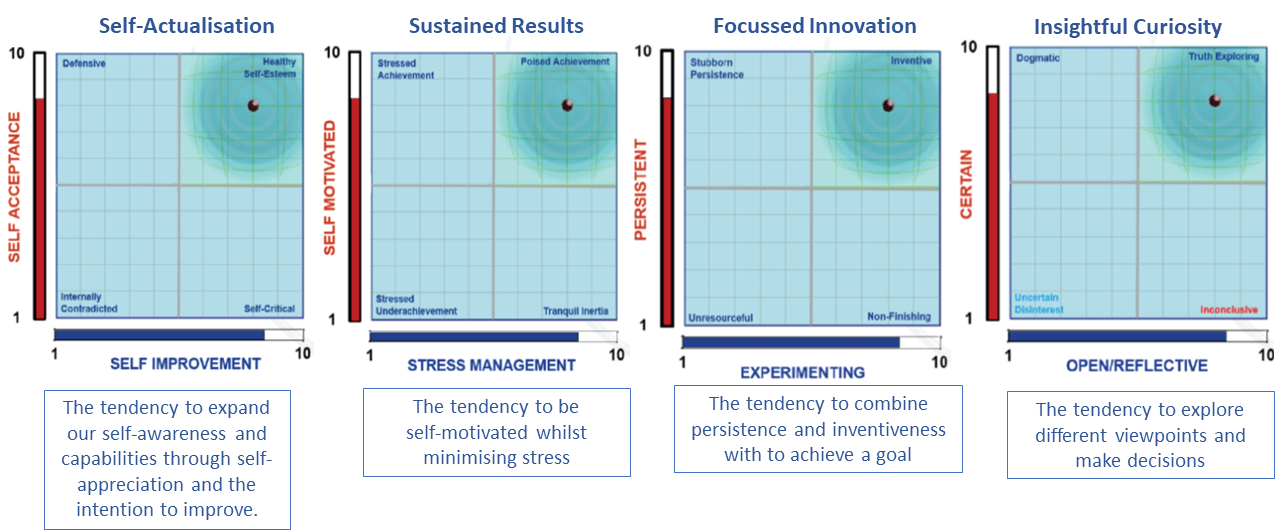
Developing a Growth Mindset requires a balance across a range of seemingly opposite behaviours or Paradoxes. Harrison Assessments uses Paradox Technology to explore an individual’s preferences and behaviours, identifying both potential strengths and factors that could hinder their success. When you have a strength in both paradoxical traits, you have what is known as balanced versatility, and this is where the magic happens.

4 of Harrison’s 12 paradoxes, shown below, are significant for developing a growth mindset:

Harrison Paradoxes - growth mindset

If you would like to explore how you measure up against the Growth Mindset Paradoxes click here to book a call

What could embracing the power of “yet” help you achieve in your business?

Embracing Challenges and Learning from Failures

Dweck’s research underscores the importance of embracing challenges as opportunities for growth. People with a growth mindset see challenges not as threats but as chances to expand their skills and knowledge. Furthermore, they approach failures as valuable learning experiences, analysing what went wrong and using that knowledge to improve. This ability to learn from failures and setbacks fuels their resilience and propels them forward in the face of adversity.

A fixed mindset is about validation. A growth mindset is about development.

In a business context, this means employees are more adaptable to change, readily acquiring new skills and knowledge to keep up with industry advancements. This adaptability is crucial in today’s fast-paced VUCA market, where businesses need to evolve and innovate rapidly to stay relevant.

This is the key to purposefulness, productivity and profit.

Points to ponder:

  • How are you fostering a culture of growth mindset in your work place?
  • What opportunities are there for the “power of yet” for you and your team?
  • How would your managers measure on the Paradoxes of Growth Mindset?

15 Ideas to Develop Your Team Without Spending ANY Money!

develop your team without spending any money - leadership coach in Chesterfield

develop your team without spending any money - leadership coach in ChesterfieldDeveloping a strong team doesn’t always require a hefty budget.

There are many things you can do every day in your business that will stretch and develop your team and create a culture of continuous improvement with simply the intention, a little bit of thought and time and a dash of creativity.

Here are 15 (well more like 30) ideas to develop your team without spending any money:

1. Encourage Knowledge Sharing:

  • Lunch and Learns: Organise informal knowledge-sharing sessions during lunch breaks where team members discuss interesting topics or skills.
  • Skill Workshops: Utilise the expertise within your team. Let team members conduct short workshops to teach others their skills and knowledge.
  • Peer Review groups: arrange regular reviews of pieces of work where peer teams can share challenges they are facing and ask for advice from others and can also share their success stories to inspire others.

2. Utilise Free Online Resources:

  • Online Courses: Leverage free online courses available on platforms like Coursera, edX, and Udemy, which has free and paid courses, for team skill development.
  • Educational Social Media Channels: Bite sized learning is really useful. Curate and share educational YouTube / Instagram / TikTok etc channels related to your industry for self-paced learning.

3. Internal Cross-Training:

  • Job Rotation and Secondments: Allow team members to experience different roles temporarily. This broadens their skills and understanding of the team’s functions.
  • Back to the floor: arrange for managers to spend time doing the job and working alongside their employees. Set goals, objectives and outcomes.
  • Peer Learning: Encourage team members to learn from each other by working together on different aspects of projects.

4. Tap into Community Resources:

  • Local Meetups: Attend local community meetups and events related to your industry. Networking and learning from others in your field can be invaluable.
  • Guest Speakers: Invite guest speakers from your community to share their experiences and insights with your team.

5. Focus on Employee Well-being:

  • Mental Health Workshops: Host workshops focused on stress management, mindfulness, and mental well-being.
  • Fitness Challenges: Organise team fitness challenges or yoga sessions to promote physical health.

6. Encourage Innovation:

  • Idea Generation Sessions: Regularly host brainstorming sessions where team members can contribute ideas for process improvement or new projects.
  • Innovation Contests: Hold friendly contests encouraging team members to come up with innovative solutions to common challenges.
  • If you could only say yes: Present a challenge and say yes to it. Then work out how you would go about making it happen using positivity as the driver.

7. Promote Team Bonding:

  • Virtual Coffee Breaks: Arrange informal virtual coffee breaks where team members can chat about non-work-related topics.
  • Team Storytelling: Have team members share personal or funny stories to create a sense of camaraderie.

8. Recognition and Appreciation:

  • Digital Kudos Board: Create a shared digital space where team members can publicly recognise and appreciate each other’s efforts.
  • Employee of the Month: Implement an employee of the month recognition program, highlighting achievements and contributions.

9. Improve Communication:

  • Feedback Loops: Establish regular feedback loops where team members can provide feedback on processes and suggest improvements.
  • Collaborative Documentation: Create a shared document or drive where team members can contribute and collaborate on best practices and tips.

10. Encourage Autonomy:

  • Self-Organised Teams: Allow teams to organise themselves for specific projects, promoting a sense of ownership and responsibility.
  • Decision-Making Circles: Implement decision-making circles where decisions are made collectively, encouraging participation from all team members.

11. Utilise Social Media and Online Forums:

  • LinkedIn Groups: Engage with LinkedIn groups related to your industry to facilitate discussions and knowledge sharing.
  • Online Forums: Participate in relevant online forums where team members can ask questions and learn from experts in the field and then share that knowledge or learning with the team.

12. Document Best Practices:

  • Knowledge Base: Develop an internal knowledge base where team members can document best practices, solutions to common problems, and useful resources.

13. Encourage Continuous Learning:

  • Book Club: Start a team book club where members read and discuss books related to personal development, leadership, or industry trends.
  • Podcast Club: Similarly, create a podcast club where team members listen to and discuss podcasts that are relevant to your industry.

14. Promote Volunteerism:

  • Volunteer Together: Participate in community service activities as a team, which not only fosters teamwork but also gives back to the community.

15. Internal Challenges:

  • Weekly Challenges: Organise weekly challenges related to work tasks, trivia, or puzzles to keep the team engaged and motivated.

Remember, the key is to be creative, inclusive, and supportive. By fostering a positive team environment that values learning, collaboration, and well-being, you can build a strong team without a significant financial investment.

And if you’d like to chat about developing your team…..Book a complementary call here

Tips for holding a great 121

Tips for holding a great 121 - leadership coach in Chesterfield

Tips for holding a great 121 - leadership coach in ChesterfieldMy clients often ask me what makes for a great 121 (one-on-one) followed by how to have them.

My personal view is that having a great 121 meeting with a team member involves effective communication, active listening, and a focus on achieving specific goals and outcomes.

They should be done regularly and consistently with the whole team and in doing so they build trust and foster great relationships and aid communication. 121s actually enable other things to happen in a business like setting goals and standards, holding people to account, having difficult conversations, giving and receiving feedback, setting and creating culture, employee engagement and so, so, so much more.

In my experience 121s don’t go well because they are often rushed, aren’t planned, don’t happen at all or the leader isn’t confident holding a 121.

They are often not viewed as activities that are as important as getting the day job done and are therefore not prioritised as a key part of the working relationship. They are not planned into the working diary or if they are, they are frequently moved because something “more important” has come up.

The impact of what a great 121 can achieve is not fully understood by leadership.

Remember that successful 121 meetings are a two-way street. Both parties should contribute to the conversation, and the focus should be on achieving positive outcomes and strengthening the relationship.

They will help you set a positive growth mindset, outcome focussed culture in your business.

So, here are my views on how to have a successful 121 meeting every time:

  1. Set Clear Objectives:Determine the purpose of the meeting with a growth mindset. Believing that 121s will foster trust and relationships, help you stay abreast of what is happening in your business, and are genuinely a key tool in your toolkit will ensure that you approach these meetings consistently with everyone. Decide what you want to achieve or discuss. I typically advocate two types of 121. A weekly task or objective focussed 121 to focus on progress and achievements towards the business objectives and then a monthly or bi weekly personal development 121. Create a clear agenda outlining the topics you’ll cover.
  2. Schedule Appropriately:Choose a convenient time and location that minimises distractions and doesn’t impact on business delivery. Ensure you have enough time to cover all agenda items without rushing. Do not cancel or postpone a 121unless there is a genuine, unavoidable catastrophe!
  3. Prepare in Advance:Do your homework. Gather any necessary information or data. If it’s a work-related meeting, review relevant documents or reports. It’s ok to ask your team member to do some pre thinking or preparation too.
  4. Effective Communication:Remember this is a two way conversation. Clearly express your ideas and thoughts. Use “I” statements to convey your perspective without making the other person defensive. Be concise and avoid going off-topic. Ask the team member for their thoughts views and opinions. Genuinely listen to the reply and encourage participation. Create an open and non-judgmental environment where the other person feels comfortable sharing their thoughts and concerns.
  5. Active Listening and Questioning:Active listening is a real and learned skill. Practice it. Pay close attention to the other person. Show that you’re engaged and interested in what they’re saying and avoid interrupting. Let them finish their thoughts before responding. Listen to hear and understand not to try to answer or respond. This means listening not only to what’s being said but also what’s not being said. Ask open-ended and curious questions to encourage discussion. Demonstrate respect and Empathy. Show respect for the other person’s time, opinions, and feelings. Be empathetic and understanding, especially when discussing sensitive topics.
  6. Stay Focused:Stick to the agenda to ensure you cover all essential topics. If new issues come up, decide whether they should be addressed in this meeting or at a later time.
  7. Problem-Solving:If you encounter challenges or conflicts, focus on finding solutions together rather than assigning blame. Brainstorm ideas and consider different perspectives.
  8. Take Notes:Decide between you who is taking notes and share these notes afterward for clarity. Keep track of key points, action items, and decisions made during the meeting and agree how the follow up will occur. You could consider sending a summary of what was discussed, action items, and any agreed-upon deadlines. Ensure that responsibilities are clear and that both parties are accountable for their tasks.
  9. Feedback and Improvement:Periodically evaluate the effectiveness of your 121 meetings and seek feedback from the other person. Adjust your approach as needed to improve future interactions.

And if you’d like to chat about developing your 121 skills, behaviours and confidence…..Book a complementary call here

8 Ways to Thrive as an Accidental Leader

8 Ways to Thrive as an Accidental Leader - leadership coach in Chesterfield

8 Ways to Thrive as an Accidental Leader - leadership coach in ChesterfieldIn the journey of our careers, many of us find ourselves in leadership positions that we hadn’t initially planned for. Whether it’s stepping up to lead a project or team due to unforeseen circumstances, being promoted because we are great at our old role, taking on a new role that carries leadership responsibilities, or growing a small business successfully to the point we now employ a team, becoming an accidental leader can be both challenging and rewarding.

Thriving as an accidental leader is not only possible but it’s also an opportunity for personal and professional growth.

So yes, it is absolutely possible to not only survive, but to excel in this unexpected role!

Here are 8 ways you can learn to thrive as an accidental leader:

  1. Identify Your Knowledge and Skills Gaps Starting Point: Effective leaders are self-aware. Take time to assess your knowledge and skills gaps and seek feedback. Identify what are you finding challenging and what you need help with. Often it will likely be around managing people than the actual technical aspect of the job. So take time to really consider is it knowledge, a skills gap or a behaviour you need support with? Recognise that you don’t have to know everything. Be willing to seek help and resources to address those gaps and get help to put a personal development plan in place. This humility and willingness to learn will earn the respect of your team and peers and be less stressful to you in the long run.
  2. Embrace Continuous Learning: As accidental leaders, our leadership skills may not have been honed in a traditional way. However, this doesn’t mean we can’t become effective or even exceptional leaders. Embrace a growth mindset of continuous learning. Attend workshops and development programmes, read leadership books, and take online courses to stay updated and confident in your role. People management has many layers and aspects and accepting there is always more you can learn and develop will stand you in good stead. The more you commit to your own growth, the better equipped you’ll be to lead your team for the long term.
  3. Get a Mentor or Coach: Having a mentor or coach can be a game-changer in your leadership journey. Identify which one you need ( they perform different roles) then seek out experienced individuals who can be a sounding board, provoke and stretch your thinking, provide guidance, share their wisdom, and offer constructive feedback. A mentor or coach can help you navigate the challenges of leadership and really accelerate your growth and confidence in your new role much mor than going it alone.
  4. Build Strong Relationships: Leadership is not about tasks and responsibilities; it’s about inspiring and motivating people. Foster positive relationships with your team members and colleagues. Effective communication, active listening, consistency and empathy go a long way in gaining their trust and support. Be approachable and create a work environment where open dialogue is encouraged. When your team knows you care, they’ll be more motivated to follow your lead.
  5. Lead by Example: One of the most powerful tools in a leader’s toolkit is leading by example. You create the culture of your team or business so demonstrate the qualities and behaviours you expect from your team. Set a positive tone by being punctual, reliable, and displaying a strong work ethic of course AND also be fully present, listen well, coach, be inclusive and caring and have fun. Your actions will inspire others to follow suit, and together, you can create a culture of accountability and excellence where everyone thrives.
  6. Delegate Wisely: Delegation is a skill every leader must master. Accidental leaders should learn to delegate tasks effectively. Identify your team members’ strengths and weaknesses, and assign responsibilities accordingly. Trust your team to handle their tasks independently, but always be available for guidance and support when needed. Delegating effectively empowers your team and allows you to focus on higher-level responsibilities.
  7. Adaptability and Resilience: Accidental leaders often find themselves facing unexpected challenges. Embrace change and adapt to new circumstances with resilience. Change management and resilience can be learnt as can strategies to stay calm under pressure, problem-solve creatively, and maintain a positive attitude. Your ability to navigate uncertainties will inspire confidence in your leadership and help your team weather any storm.
  8. Communicate: Effective communication is the backbone of successful leadership. Clearly articulate your expectations, goals, and vision to your team and encourage open and honest communication. Be an active and empathetic listener, hold regular 121s and talk about non work stuff. Be human. Good communication fosters trust and collaboration, making it easier to lead effectively.

So go on, embrace your leadership journey with enthusiasm, and you’ll be amazed at the positive changes you can bring about.


Points to ponder:

  • What resonates with me? Do I currently embrace my role?
  • What people skills do I know will make a difference to me and my team and that I want to or need to develop?
  • What further impact can I make?

And if you’d like to chat about developing your leadership skills and behaviours Book a complementary call here

Unintentional Leadership: 5 Clues That You’re an Accidental Leader

Unintentional Leadership 5 Clues That You're an Accidental Leader - leadership coach in Chesterfield

Unintentional Leadership 5 Clues That You're an Accidental Leader - leadership coach in ChesterfieldWhat are accidental leaders?

These are individuals who never set out to lead, yet for various reasons found themselves steering teams, guiding projects or running small businesses and as a result now face the challenges of managing people without prior preparation or training.. .

If you’ve ever questioned how you ended up in a leadership role, you might just be an accidental leader.

Let’s explore five key clues that signal you’ve embarked on an unplanned leadership journey.

1. The Promotion That Caught You by Surprise:

Remember that promotion you received? The one that seemed to come out of the blue? If your ascent to a leadership position left you pleasantly stunned, you might be an accidental leader. Accidental leaders often find themselves climbing the corporate ladder due to their expertise and exceptional performance in their functional domain.

2. Thriving in the Limelight:

If you suddenly find yourself in the spotlight, representing your team or department in meetings and discussions, you might have inadvertently stepped into a leadership role. Accidental leaders often become the go-to person for insights and decisions simply because of their proficiency.

3. People Management Wasn’t in the Blueprint:

If your journey started with a focus on perfecting your technical skills rather than developing leadership prowess, you might just be an accidental leader. The transition from an individual contributor to managing a team can be a surprise twist in your career story.

4. From Founder to Leader:

As your small business expands, you will take on responsibilities beyond your initial scope. When you start coordinating projects, making strategic decisions and you find yourself surrounded by a growing team, you’re transitioning into a leadership role. The shift from “doing” to “leading” can be a telltale sign. Your influence extends beyond your product or service as you start to guide and inspire others toward a shared vision. Your actions and decisions shape the culture and direction of your business.

5. The Imposter Syndrome Creeps In:

One of the most common feelings among accidental leaders is the imposter syndrome – that nagging doubt that you’re not qualified for the role you’re in, that you will get found out eventually. If you sometimes wonder how you ended up leading a team or department, rest assured that imposter syndrome is a shared experience for many accidental leaders.

Unintentional leadership is not a phenomenon exclusive to you; it’s a path many have walked before.

In bigger businesses these individuals, are often propelled into leadership roles due to their functional expertise. They excelled at their technical specialism or ability to do their current job really well and this was what got them promoted, with more responsibility and direct reports …..until suddenly…they’re a manager who leads. Often thrust into positions of authority without adequate preparation, these accidental leaders grapple with the complexities of managing teams, while yearning for the expertise that brought them to this point.

As a small business owner, scaling up often means you can end up leading a team of people by default rather than design. The quicker your business grows, the quicker you take on a team of people. Because you are so focussed on getting the day job done, dealing with the pace of change and keeping the business running you probably don’t even see yourself as a leader initially. You likely still see yourself as your professional role (eg, solicitor, IT consultant, accountant, digital marketer) and you continue to prioritise the day job activities over learning and developing those skills that will help you manage and lead you people effectively.


Points to ponder:

  • How did I get here? – what resonates with me?
  • Do I embrace my role?
  • What further impact can I make?

Remember, the journey of an accidental leader can be as rewarding as it is unexpected.

Embrace the clues that reveal your status as an accidental leader and use these signs as a compass to navigate your new role.

Invest in management and leadership development, and seize the opportunity to shape a positive impact within your team and business.

And if you’d like to chat about how you do that Book a complementary call here